
Insulating a 10×12 shed is one of the best upgrades you can make if you want a structure that stays dry, comfortable, and usable throughout the year. Whether your shed is a workshop, garden shed, hobby room, backyard office, or simply a storage space for tools and equipment, proper insulation dramatically improves durability and energy efficiency.
I made the mistake of not insulating my first shed, and within a year, my expensive table saw had rust spots from the condensation. Trust me, spending the extra $200 on foam board now will save your tools later.
For step-by-step building instructions and free downloadable plans, visit the full guide here:
https://10x12shedplans.com/10×12-shed-plans-updated-pdfs-complete-expert-guide/
Why a 10×12 Shed Needs Insulation
Many people assume sheds don’t need insulation, but a 10×12 shed faces the same climate challenges as a small cabin:
🚧 Planning Your Next Build?
Don't start without the Ultimate Guide: Barns, Sheds & Outbuildings. It’s the "DIY Bible" containing:
- 100+ Plans: Barns, sheds, garages, and playhouses.
- Step-by-Step: Covers foundations, framing, wiring, and roofing.
- Blueprints: Includes info on ordering CAD files.
As an Amazon Associate, I earn from qualifying purchases at no extra cost to you.
- Summer heat buildup inside
- Winter cold making tools brittle
- Moisture causing rust, mold, and rot
- Condensation dripping from roof panels
- Noise from rain, wind, or machinery
Insulation solves all of these issues by creating a controlled environment. If you plan to store electronics, power tools, paint, chemicals, woodworking equipment, or gardening supplies, insulation becomes almost essential. A properly insulated shed also prevents sudden temperature swings that damage wood, plywood, and metal tools over time.
Best Insulation Materials for a 10×12 Shed
Choosing the right insulation depends on your climate, budget, and how you plan to use the shed. Here are the most effective options.
⚠️ Avoid Lumber Waste
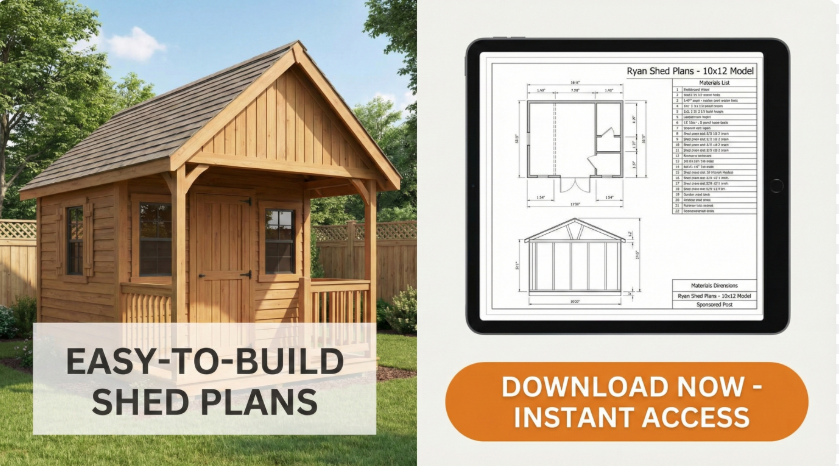
Don't guess measurements! Get the exact cutting list and step-by-step blueprints for this 10x12 build.
As an Amazon Associate, I earn from qualifying purchases. This helps support our free DIY guides at no extra cost to you.
1. Fiberglass Batt Insulation (Most Affordable)
Fiberglass remains the most common insulation used in residential construction.
Benefits:
- Very budget-friendly
- Fits perfectly between 2×4 and 2×6 studs
- Widely available
Drawbacks:
- Requires vapor barrier
- Irritates skin and eyes if handled without protection
- Not ideal in humid climates unless sealed properly
Best For: Mild and cold states (MI, WI, MN, PA, NY, Canada).
2. Rigid Foam Board Insulation (Highly Recommended)
Rigid foam boards like XPS, EPS, or Polyiso are perfect for sheds.
Benefits:
- High R-value per inch
- Excellent moisture resistance
- Can be used under floors, walls, and ceilings
- Easy DIY installation
Drawbacks:
- More expensive than fiberglass
- Must be sealed at seams for maximum performance
Best For: Humid, coastal, or high-temperature areas.
3. Spray Foam Insulation (Premium Option)
Spray foam is the best insulation for long-term, high-performance use.
Benefits:
- Creates a full air seal
- Prevents pests, drafts, and moisture
- Ideal for irregular spaces
- Highest energy efficiency
Drawbacks:
- Most expensive option
- Hard to remove or adjust once installed
Best For: Workshops, backyard offices, year-round hobby rooms.
4. Radiant Barrier / Reflective Insulation (For Hot Climates)
Radiant barriers are aluminum-coated rolls that reflect heat away.
Benefits:
- Great under metal roofs
- Simple to install
- Works well in hot, sunny climates
Drawbacks:
⚠️ Avoid Lumber Waste
Don't guess measurements! Get the exact cutting list and step-by-step blueprints for this 10x12 build.
As an Amazon Associate, I earn from qualifying purchases. This helps support our free DIY guides at no extra cost to you.
- Does not insulate well on its own
- Not suitable for cold-weather states
Best For: Arizona, Texas, California, and Florida.
Recommended R-Values for a 10×12 Shed
Insulation effectiveness is measured in R-values.
Here’s what your shed needs:
- Hot climates: R-10 to R-13
- Moderate climates: R-13 to R-15
- Cold / snowy climates: R-19 to R-21 (or higher)
If you plan to heat or cool the shed, higher R-values are worth the investment.
How to Insulate 10×12 Shed Walls (Step-by-Step)
Step 1: Inspect Wall Cavities
Before adding insulation, make sure there’s:
- No moisture or leaks
- No gaps around corners or edges
- No insects or nests
Seal all cracks using caulk or minimal-expansion spray foam.
Step 2: Install the Insulation Material
Depending on your choice:
- Fiberglass batts go between studs
- Rigid foam boards can be friction-fit and sealed
- Spray foam fills cavities completely
Make sure not to compress fiberglass; this reduces R-value.
Step 3: Apply a Vapor Barrier (If Needed)
In cold or humid regions, add a vapor barrier over the entire wall.
Step 4: Add an Interior Covering
Sheathing adds strength and fire protection. Options include:
- Plywood (best for workshops)
- OSB panels
- Drywall (best for home-office style)
How to Insulate a 10×12 Shed Roof
The roof is the largest surface area and loses the most heat.
For Gable Roofs:
- Install insulation between rafters
- Add baffles to allow airflow
- Install a radiant barrier for extra heat control
- Cover with panels or ceiling boards
For Lean-To Roofs:
Because rafter space is smaller, use:
- Rigid foam
- Spray foam
These provide better coverage in tight spaces.
Ventilation + insulation = zero condensation problems.
Ridge vents, gable vents, or soffit vents are strongly recommended.
How to Insulate the Floor of a 10×12 Shed
Shed floors get colder than walls because air flows underneath.
Best options:
- Rigid foam between joists — cheap and effective.
- Spray foam under the shed — best for energy efficiency.
- Insulated subfloor panels — great for workshops.
Before insulating, always install a moisture barrier under the shed.
Moisture Control & Vapor Barriers
Insulation fails when moisture collects inside the walls.
To prevent this:
- Use treated lumber for floor framing
- Install drip edge on roofing
- Seal all exterior cracks
- Add underlayment under shingles
- Provide ventilation (ridge + soffit or gable vents)
Moisture is the #1 cause of mold, rot, and wood decay.
Cost to Insulate a 10×12 Shed (Realistic Breakdown)
Walls
- Fiberglass: 80–150 USD
- Rigid foam: 150–250 USD
- Spray foam: 300–600 USD
Ceiling
- Fiberglass: 60–120 USD
- Rigid foam: 120–200 USD
- Spray foam: 300–500 USD
Floor
- Rigid foam: 60–120 USD
- Spray foam: 200–400 USD
Total estimated cost: 200 to 1200 USD depending on material choice.
If you want a year-round workshop or office, spray foam is your best investment.
Should You Insulate Your 10×12 Shed?
You should insulate if:
- You live in a hot or cold climate
- You store valuable power tools or electronics
- You plan to spend time working inside
- You want a moisture-free shed
- You intend to heat or cool the shed
You can skip insulation if:
- Your shed stores only outdoor tools
- You live in a mild climate
- You want the simplest, cheapest build
Final Thoughts
Insulating a 10×12 shed is one of the smartest upgrades you can make. It keeps your shed comfortable, protects tools from rust, prevents mold and moisture, and adds long-term durability. With the right materials and installation steps, your shed becomes a year-round usable structure.
For complete diagrams, plans, and free downloadable PDFs, visit the full guide:
https://10x12shedplans.com/10×12-shed-plans-updated-pdfs-complete-expert-guide/