
I learned this the hard way after my first shed started rotting at the bottom corners after just two winters. It is heartbreaking to spend weeks building something only to watch the rain destroy it because you missed a $20 roll of flashing tape.
Weatherproofing your 10×12 shed is one of the most important steps if you want your structure to last for decades. Rain, humidity, snow, UV rays, and temperature swings can damage wood, weaken fasteners, and cause rot or leaks over time. In this guide, you’ll learn the most effective methods to protect your shed from all climate conditions.
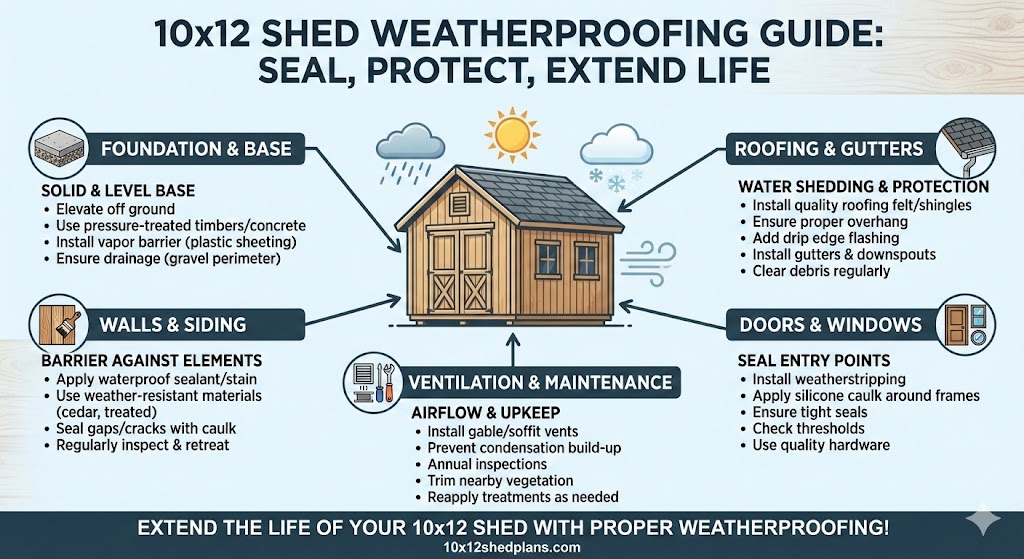
For full construction plans and free downloadable PDFs, visit the main guide>>
Why Weatherproofing Matters
A shed that isn’t sealed properly is vulnerable to:
🚧 Planning Your Next Build?
Don't start without the Ultimate Guide: Barns, Sheds & Outbuildings. It’s the "DIY Bible" containing:
- 100+ Plans: Barns, sheds, garages, and playhouses.
- Step-by-Step: Covers foundations, framing, wiring, and roofing.
- Blueprints: Includes info on ordering CAD files.
As an Amazon Associate, I earn from qualifying purchases at no extra cost to you.
- Water infiltration
- Mold and mildew
- Rotting wood
- Warped siding
- Leaking roofs
- Rusted tools and equipment
Weatherproofing shields your 10×12 shed from the elements and significantly increases its lifespan. This is especially important in areas with heavy rainfall, extreme heat, or snow.
Step 1: Seal the Shed Base and Floor
Use a Moisture Barrier
Before building your shed, install a moisture barrier such as:
⚠️ Avoid Lumber Waste
Don't guess measurements! Get the exact cutting list and step-by-step blueprints for this 10x12 build.
As an Amazon Associate, I earn from qualifying purchases. This helps support our free DIY guides at no extra cost to you.
- Heavy-duty plastic sheeting
- Landscaping fabric
- Underlayment membrane
Place it under the gravel pad or foundation blocks to prevent ground moisture from rising.
Pressure-Treated Floor Joists
Always use pressure-treated lumber for floor framing. It protects against:
- Rot
- Termite damage
- Moisture absorption
Floor Sealing
After installing your subfloor:
- Apply a weatherproof deck sealer
- Seal all seams with caulk
This prevents moisture from penetrating the floor structure.
Step 2: Protect the Walls
Choose Durable Siding
The best weather-resistant siding options include:
- LP SmartSide
- Vinyl siding
- Metal panels
- T1-11 (if sealed properly)
Seal All Gaps
Use high-quality exterior caulk around:
- Windows
- Doors
- Trim boards
- Wall seams
This keeps wind-driven rain from entering the shed.
Paint or Stain the Exterior
Finish your siding with:
- Exterior paint (long-lasting)
- Weatherproof stain (preserves wood)
Apply two coats for maximum protection.
Step 3: Roof Weatherproofing
Roofing Underlayment
Before shingles or metal panels, always install:
- Felt paper
- Synthetic underlayment
This prevents leaks and adds an extra layer of moisture protection.
Install Drip Edge
Place drip edge along:
- Eaves
- Rakes
It prevents water from curling under the roof and damaging walls.
Shingles or Metal Roofing
Both options work well:
- Asphalt shingles are cheaper and effective.
- Metal roofing lasts longer and reflects heat.
Ridge Vent (Optional but Strongly Recommended)
A ridge vent helps prevent condensation by allowing hot air to escape.
⚠️ Avoid Lumber Waste
Don't guess measurements! Get the exact cutting list and step-by-step blueprints for this 10x12 build.
As an Amazon Associate, I earn from qualifying purchases. This helps support our free DIY guides at no extra cost to you.
Step 4: Weatherproof Doors and Windows
Door Sealing
Install:
- Weatherstripping
- Door sweep
- High-quality hinges
This blocks drafts and rain.
Window Flashing
Use window flashing tape around frames before installing siding.
Caulk Around Frames
Caulk all window and door edges to prevent gaps.
Step 5: Add Gutters and Water Control
Gutters and downspouts help divert water away from the shed foundation.
Benefits:
- Prevents soil erosion
- Keeps water from pooling near the shed
- Protects foundation from rot
Install splash blocks or drain pipes to direct water further away.
Step 6: Protect the Shed Interior
Ventilation
Good airflow prevents trapped moisture.
Options include:
- Gable vents
- Ridge vents
- Soffit vents
- Operable windows
Insulation (Optional)
Insulating walls and roof reduces condensation and improves temperature control.
Desiccant Packs or Dehumidifier
Use moisture absorbers inside if humidity is high.
Step 7: Seasonal Maintenance Checklist
To keep your 10×12 shed weatherproof long-term, follow this list:
Spring
- Check roof for loose shingles
- Inspect caulk around windows and doors
- Reapply protective exterior sealers if needed
Summer
- Look for cracks in siding
- Ensure vents are clear
- Inspect for insect activity
Fall
- Clean gutters
- Check moisture barrier integrity
- Seal any new gaps
Winter
- Remove snow from roof edges
- Monitor interior condensation
- Check for freeze-related cracks
Cost Breakdown for Weatherproofing a 10×12 Shed
- Caulk & Sealant: 20–40 USD
- Exterior Paint/Stain: 50–120 USD
- Drip Edge: 20–40 USD
- Underlayment: 30–60 USD
- Gutters: 40–100 USD
- Weatherstripping: 10–25 USD
- Flashing tape: 15–30 USD
Total Estimated Cost: 185–415 USD
This cost varies depending on materials and climate needs.
Final Thoughts
Weatherproofing a 10×12 shed is essential for protecting your structure from rain, moisture, heat, and snow. With proper sealing, roofing, siding protection, and seasonal maintenance, your shed can last 20+ years with minimal repairs.
For full construction plans, diagrams, and free 10×12 shed PDF downloads, visit:
https://10x12shedplans.com/10×12-shed-plans-updated-pdfs-complete-expert-guide/