
When I first decided to outfit my garden shed and workshop with custom storage, I made the exact same mistake every beginner makes. I drove down to the local lumberyard, bought whatever standard sheets of 1/2-inch and 3/4-inch plywood , I could wrestle into the back of my truck, and used them for absolutely everything.
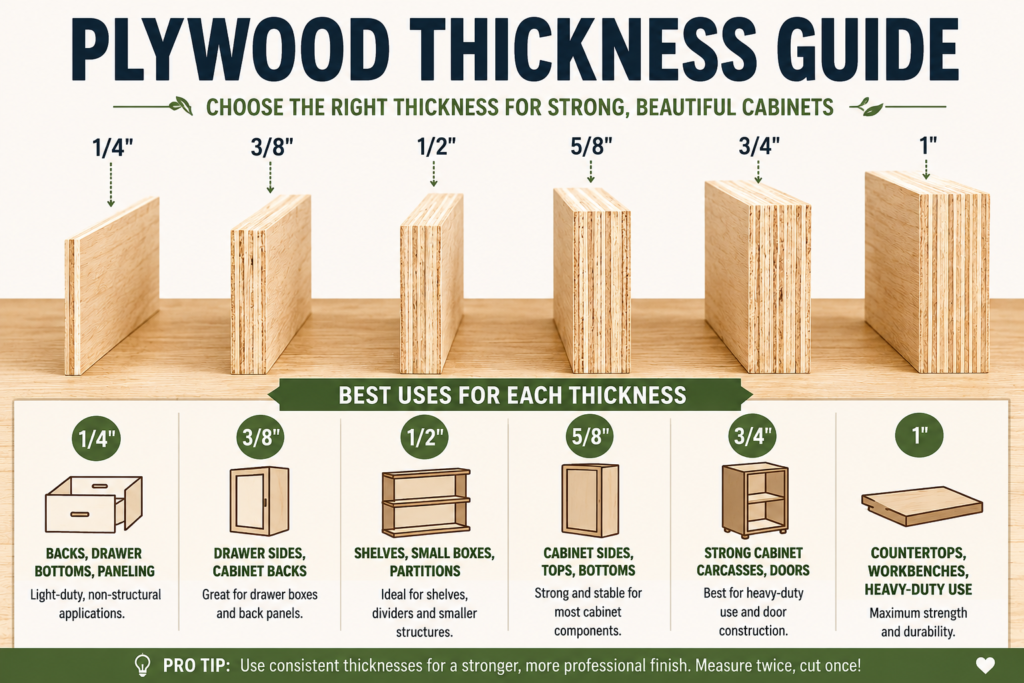
I thought I was saving time by keeping my materials list short. Instead, I ended up with cabinet backs that were ridiculously heavy, shelves that bowed under the weight of my power tools, and drawer boxes that ate up half their own interior storage space because the sides were too thick.
Over the years, after building dozens of cabinets and tearing out a few failures, I’ve learned that picking the right plywood thickness isn’t just a cost-saving measure. It is the fundamental difference between a clunky, frustrating build and furniture that functions exactly the way you need it to for decades.



If you are gearing up for your next cabinet build, you need a plan. Here is a breakdown of the exact plywood thicknesses I use for different components, why I use them, and how you can apply this to your own shop or home projects.
Why Mixing Plywood Thicknesses Matters
Before we get into the specific sizes, let’s talk about why you shouldn’t just build an entire cabinet out of one type of wood.
🚧 Planning Your Next Build?
Don't start without the Ultimate Guide: Barns, Sheds & Outbuildings. It’s the "DIY Bible" containing:
- 100+ Plans: Barns, sheds, garages, and playhouses.
- Step-by-Step: Covers foundations, framing, wiring, and roofing.
- Blueprints: Includes info on ordering CAD files.
- Weight Management: A full 4×8 sheet of 3/4-inch hardwood plywood weighs around 70 pounds. If you build an entire wall cabinet out of that, hanging it becomes a dangerous, two-person nightmare. Using thinner stock for backs and drawer bottoms significantly reduces the dead weight on your wall cleats.
- Space Efficiency: Inside a drawer, every fraction of an inch counts. If you use 3/4-inch wood for a small drawer box, you are losing an inch and a half of interior width. Thinner walls mean more room for your tools and hardware.
- Cost: Plywood prices fluctuate, but thinner sheets are always cheaper. Buying 1/4-inch sheets for your cabinet backs instead of using leftover 1/2-inch stock leaves more money in your pocket for better hardware or high-quality wood glue.
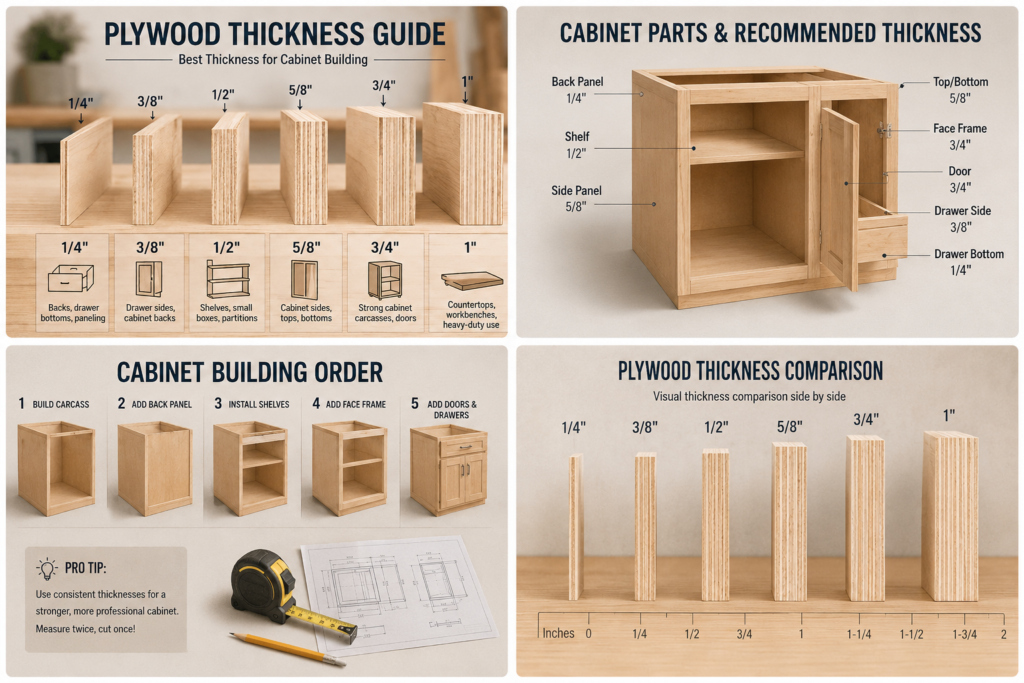
The Ultimate Plywood Thickness Breakdown
1/4″ Plywood: The Lightweight Problem Solver
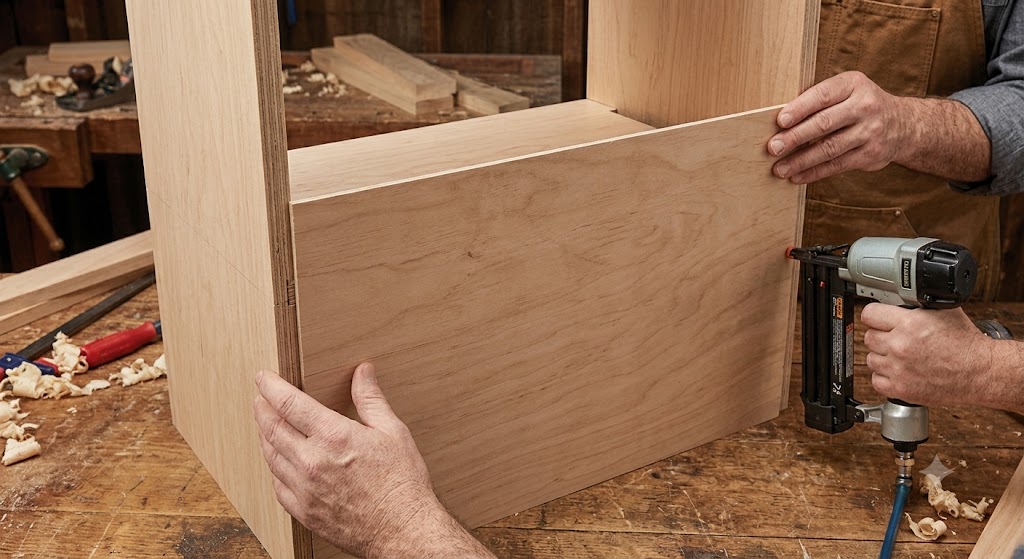
Best for: Cabinet backs, small drawer bottoms, and dust panels.
You rarely need structural support from the back of a wall cabinet or the bottom of a lightweight organizer drawer. I use 1/4-inch plywood almost exclusively for cabinet backs.
When building storage for a garden shed or an uninsulated garage, you absolutely need a back panel to keep out dust, moisture, and pests. Fastening a 1/4-inch sheet to the back of your cabinet frame serves another massive purpose: it squares up the entire carcass. When you nail or staple that thin sheet onto the back of your box, it locks the 90-degree angles in place and prevents racking (that side-to-side wobble), all without adding unnecessary weight to the final piece. I also slide 1/4-inch panels into grooves for the bottoms of smaller drawers holding light items like screws, sandpaper, and hand tools.

3/8″ Plywood: The Middle Ground
Best for: Medium drawer sides and specialty partitions.
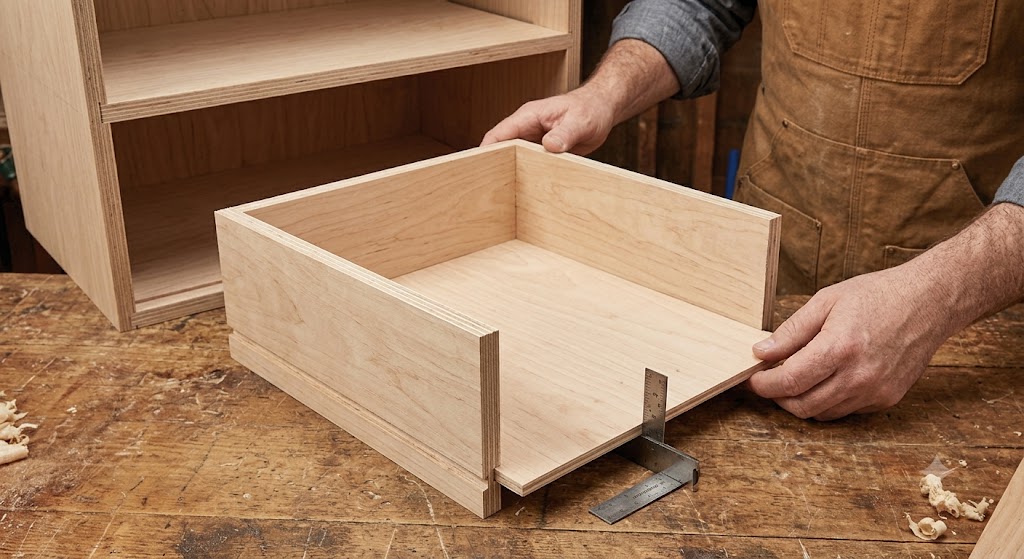
I’ll be honest, I don’t reach for middle ground. when I’m building medium-sized drawers where 1/4-inch feels too flimsy but 1/2-inch feels way too bulky, 3/8-inch hits the sweet spot for the drawer sides. It gives you just enough meat to comfortably cut a dado groove for a drawer bottom, but it keeps the box light. It also works exceptionally well if you are building custom inserts or dividers for your tool chest.
1/2″ Plywood: The Organizer’s Go-To

Best for: Drawer boxes, standard shelves, and interior dividers.
If I am building organizers, small boxes, or interior partitions for my shop cabinets, 1/2-inch is my standard. It’s rigid enough to hold its shape perfectly, but thin enough that it doesn’t eat up valuable storage space inside the cabinet.
This is also my absolute favorite thickness for building standard drawer boxes. It takes wood glue and brad nails beautifully, and it is thick enough to securely hold the screws for side-mount drawer slides. It’s also a great choice for standard shelving, provided the span isn’t wider than about 24 to 30 inches. Any wider than that, and a 1/2-inch shelf will start to sag under the weight of heavy items like paint cans or power tools.
5/8″ Plywood: The Standard Box
Best for: Frameless cabinet sides, tops, and bottoms.
For standard frameless cabinets (often called Euro-style cabinets), 5/8-inch plywood is incredibly reliable. It provides a sturdy box for the cabinet sides, tops, and bottoms without crossing into the heavy, cumbersome territory of thicker boards.
If you are working alone and don’t want to wrestle massive weight, 5/8-inch is highly manageable. It holds hinge screws well and provides a solid base for attaching drawer slides. Many commercial cabinet shops use 5/8-inch melamine or veneered plywood as their absolute baseline for kitchen construction.
3/4″ Plywood: The Heavy-Duty Foundation

Best for: Strong cabinet carcasses, base cabinets, and slab doors
When I need something bulletproof, I immediately grab 3/4-inch plywood. This is the industry standard for strong cabinet carcasses, especially base cabinets that will eventually support a heavy workbench top or concrete counters.
I build all of my primary shop base cabinets out of 3/4-inch material. It won’t warp easily, it holds pocket screws securely without splitting (which is huge for fast shop projects), and it provides maximum stability. If you are building flat, slab-style cabinet doors, 3/4-inch is also the way to go to ensure the doors don’t warp over time.
My Personal Process: 3 Tips for Working with Plywood
Knowing the right thickness is only half the battle. Handling the sheets in the shop is where things actually get built. Here is how I avoid wasting expensive materials:
- Break it down before the table saw: Trying to push a full, 70-pound sheet of 3/4-inch plywood through a standard table saw by yourself is dangerous and usually results in bad cuts. I always lay a sheet of rigid foam insulation on the floor, place my plywood on top, and use a track saw (or a circular saw with a straight edge guide) to break the big sheets down into manageable pieces.
- Preventing Tear-Out: Plywood veneers love to splinter when you cut them cross-grain. To get clean edges for cabinet building, I use a high-tooth-count blade (usually 60 to 80 teeth) and apply a strip of blue painter’s tape directly over the cut line before running the saw over it. The tape holds the wood fibers down and leaves a perfectly clean edge.
- Mind your fasteners: When joining 3/4-inch plywood with pocket holes, always use 1 1/4-inch coarse thread screws. If you use fine-thread screws meant for hardwoods, they will just strip out the softer interior plies of the plywood and ruin your joint.
Frequently Asked Questions About Cabinet Plywood
What is the best type of plywood for cabinets?
For shop furniture or utility cabinets, standard BCX pine or fir plywood works, but it takes a lot of sanding. For anything you want to look good or paint smoothly, Baltic Birch or a good Maple/Oak veneered plywood with a dense core is the best choice.
Can I use MDF instead of plywood for cabinets?
You can use MDF (Medium Density Fiberboard) for cabinet doors or painted side panels, but I never use it for structural shelves or base boxes in a garage or shed. MDF absorbs moisture like a sponge, swells up, and falls apart if it gets wet. It also sags heavily over time if used for shelving. Plywood is vastly superior for structural integrity.
How do you finish raw plywood edges?
The fastest and most professional way to hide the ugly, striped edge of a cut piece of plywood is to use iron-on edge banding. It’s a thin strip of real wood veneer with heat-activated glue on the back. You literally just iron it onto the edge of your 3/4-inch or 1/2-inch plywood, trim the excess, and it looks like a solid piece of hardwood.
Matching the right thickness to the right task makes the building process smoother and the final product significantly better. Before you fire up your saws, take ten minutes to map out your cuts and assign the right thickness to the right parts. It will save your back, speed up your assembly, and keep your materials budget exactly where it needs to be.